
South Africa Luxury Wildlife Safaris
The Ultimate Guide to the World’s Most Accessible Big Five Destination
South Africa occupies a unique position in the world of luxury safari travel. It is the destination where first-timers discover Africa’s wildlife with the reassurance of world-class infrastructure, malaria-free options, and some of the finest game lodges on the continent — and where seasoned safari travellers return, drawn by the extraordinary quality of guiding, the diversity of ecosystems, and the sheer breadth of experience on offer. From the iconic bushveld of the Greater Kruger to the fynbos-fringed reserves of the Western Cape, from the big cat-rich plains of KwaZulu-Natal to the desert landscapes of the Kalahari, South Africa delivers a luxury wildlife safari experience of remarkable range and depth.
What distinguishes South Africa from every other African safari destination is the combination of accessibility and excellence. International flights land directly into Johannesburg and Cape Town. Private game reserves share unfenced boundaries with national parks, creating vast wilderness areas managed to the highest conservation standards. Guiding qualifications are among the most rigorous in Africa. And the lodges themselves — built and refined over decades by owners who have spent their lives in the bush — have set a global benchmark for what luxury in a wild place can and should mean.
Why South Africa is the World’s Premier Luxury Safari Destination
South Africa’s safari industry has had longer to develop, refine, and professionalise than almost anywhere else on the continent, and it shows. The country’s private game reserve system — pioneered in the Greater Kruger region from the 1960s onwards — created a model that has since been replicated across Africa: private land, exclusive wildlife areas, limited guest numbers, and a level of service and guiding that the national park system alone could never provide.
The results are extraordinary. A luxury safari in South Africa typically means a private vehicle and guide for every two to four guests, off-road driving capability to follow wildlife wherever it leads, night drives illuminated by spotlights, and guided bush walks with a qualified field guide. These are experiences that many East African parks still do not permit — and they transform the safari from a passive observation exercise into a genuinely immersive encounter with the wild.
South Africa also offers something no other Big Five destination can match: the option of a malaria-free safari. Several excellent reserves — including Madikwe Game Reserve, the Waterberg, and the Eastern Cape reserves — sit outside the malaria zone entirely, making them ideal for families with young children, older travellers, or anyone for whom antimalarial medication is not suitable. The wildlife is every bit as impressive as in malarial areas, and the peace of mind is invaluable.
Add to this the ability to combine a safari with a world-class wine region, a dramatic coastline, one of the world’s great cities in Cape Town, or a great white shark diving experience off Gansbaai — and South Africa becomes not just a safari destination but a complete luxury travel experience.
Top Destinations for Luxury Wildlife Safaris in South Africa
The Greater Kruger: Sabi Sand, Timbavati, and Klaserie
The Greater Kruger ecosystem — encompassing Kruger National Park and the private reserves that share its western and southern boundaries — is the heartland of South African safari tourism, and for very good reason. This vast wilderness of approximately two million hectares is home to one of Africa’s densest concentrations of wildlife, including all of the Big Five: lion, leopard, elephant, buffalo, and rhino.
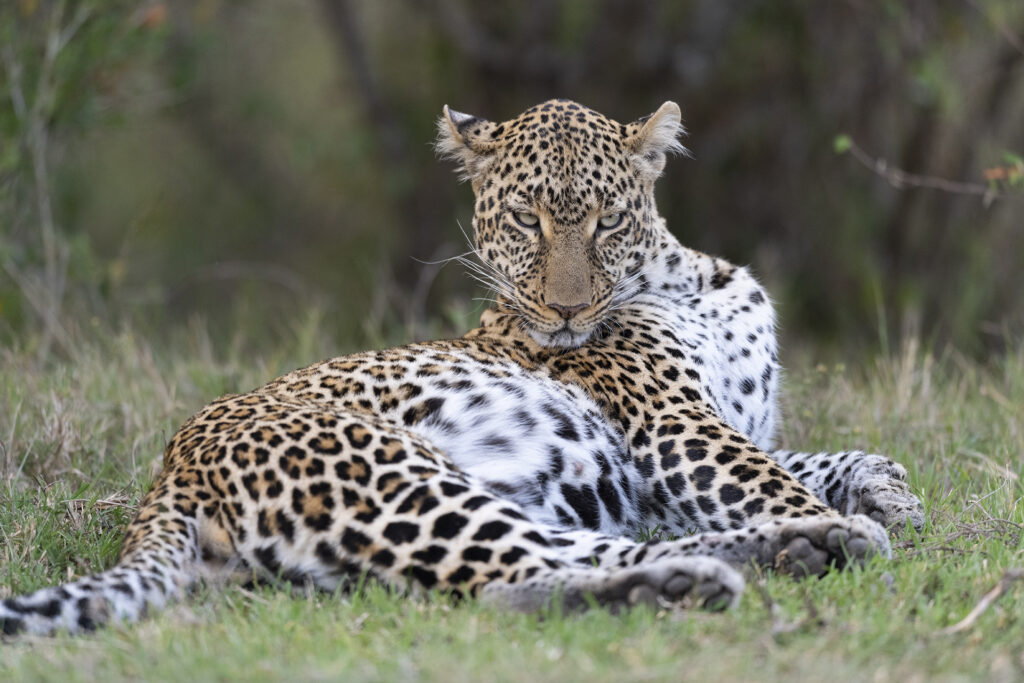
The private reserves flanking Kruger are where the finest luxury experiences are found. The Sabi Sand Game Reserveis the most celebrated — a 65,000-hectare wilderness famous above all for its extraordinary leopard sightings. Decades of vehicle habituation have produced leopards of unusual confidence, and sightings at close range, in excellent light, for extended periods, are genuinely common. Lion, wild dog, cheetah, elephant, and white and black rhino are all regularly encountered.
Luxury lodges in the Sabi Sand include some of Africa’s most iconic properties — intimate, architecturally refined camps of six to ten suites, with private plunge pools, bespoke dining, and guiding teams whose knowledge of individual animals and their territories is encyclopaedic. The best lodges maintain their own wildlife databases, tracking individual leopards, lion prides, and wild dog packs across seasons and years.
The Timbavati and Klaserie private nature reserves, further north along Kruger’s boundary, offer a similar quality of wildlife with a slightly different character — more remote, less visited, and with a number of exceptional owner-run lodges that deliver a highly personalised experience. White lions — a rare genetic variant — have their origin in the Timbavati, and occasional sightings remain one of the reserve’s great talking points.
Madikwe Game Reserve, North West Province
Madikwe is South Africa’s fourth-largest game reserve and one of its best-kept secrets. Malaria-free, extraordinarily well-stocked with wildlife — including the Big Five, wild dog, and cheetah — and home to a collection of genuinely exceptional luxury lodges, it delivers a safari experience that rivals the Greater Kruger without the crowds.
Madikwe was established in 1991 on degraded farmland through one of Africa’s most ambitious rewilding projects, Operation Phoenix, which relocated nearly 10,000 animals of 27 species to the reserve over several years. Today, it is a thriving, self-sustaining ecosystem that has become a model for conservation-through-tourism worldwide.
Luxury camps in Madikwe are small and exclusive — rarely more than eight suites — and benefit from the reserve’s strict policy of limiting total visitor numbers. Game drives are in private vehicles, guiding standards are exceptionally high, and the combination of diverse habitat (bushveld, rocky ridges, open grasslands, and seasonal pans) produces varied and exciting game viewing year-round.
KwaZulu-Natal: Phinda, Thanda, and the Zululand Reserves
KwaZulu-Natal in South Africa’s east offers a safari experience with a distinctly different character from the bushveld of Kruger and Madikwe. The reserves here — Phinda Private Game Reserve, Thanda Safari, Zimanga, and others — sit in a landscape of rolling thornveld, riverine forest, sand forest, and wetland that is extraordinarily biodiverse and visually unlike anything in the Greater Kruger.
Phinda is justifiably famous for its cheetah and rhino conservation programmes, its outstanding bird list, and the remarkable diversity of its seven distinct habitat types within a single reserve. It was also one of the first South African reserves to pioneer community conservation on a meaningful scale, and its relationship with the surrounding Zulu and Thonga communities remains a model for the industry.
Thanda Safari offers a more intimate, owner-managed experience with exceptional Zulu cultural programming alongside superb Big Five game viewing. The reserve’s isolation and limited guest numbers create a sense of genuine exclusivity rare even in the luxury safari market.
The nearby iSimangaliso Wetland Park — a UNESCO World Heritage Site — adds a completely different wildlife dimension: hippo, crocodile, loggerhead and leatherback sea turtles (seasonally), and some of the finest coastal birdwatching in southern Africa. A luxury combination of Phinda and iSimangaliso is among the most varied and rewarding safari itineraries available in South Africa.
The Eastern Cape: Shamwari, Kariega, and Amakhala
The malaria-free reserves of the Eastern Cape offer an increasingly popular alternative to the Greater Kruger, combining rewilded Big Five game reserves with the dramatic scenery of the Eastern Cape — rolling hills, dense valley bushveld, and the coastline of the Garden Route within easy reach.
Shamwari Private Game Reserve is the largest and most celebrated, a 25,000-hectare reserve that has been meticulously rewilded over three decades. Its luxury lodges range from classic colonial-style manor houses to intimate tented camps, and its conservation programme — including a renowned rhino orphanage and lion and leopard rehabilitation — offers guests a level of conservation engagement unavailable elsewhere.
Kariega Game Reserve and Amakhala Game Reserve are smaller and more intimate, ideal for guests who want a personalised, owner-managed experience in a malaria-free setting. Both offer excellent Big Five game viewing, with the added pleasure of the Eastern Cape’s scenic landscape and proximity to the Garden Route for a combined safari-and-coast itinerary.
The Kalahari: Tswalu
For the traveller in search of something genuinely different, Tswalu Kalahari — South Africa’s largest private game reserve — offers an experience that stands apart from anything else in the country. Covering 114,000 hectares of red Kalahari dunes and open desert savannah, Tswalu is home to species rarely seen elsewhere in South Africa: desert black rhino, aardvark, pangolin, Cape mountain zebra, and the extraordinary meerkats of the Kalahari — habituated to human presence and among the most charming wildlife encounters in Africa.
Tswalu operates just two small lodges with a strict maximum of thirty guests across the entire reserve, meaning game drives unfold in near-total solitude. The guiding team is exceptional, the research programme world-class, and the lodge design — low-slung, expansive, with panoramic views across the dune landscape — is among the most beautiful in South Africa.
What to Expect at a South African Luxury Safari Lodge
Accommodation
South Africa’s luxury lodges have had decades to refine their offering, and the result is accommodation that consistently matches — and often exceeds — the standard of the world’s finest hotels. Suites are spacious and meticulously designed, drawing on local materials and landscape for inspiration. Private plunge pools, outdoor showers, open-fronted living areas, and carefully curated art collections are standard at the best properties. Several lodges now offer standalone villa accommodation with private butler, vehicle, and guide — a level of exclusivity that has set a new benchmark for the industry.
Guiding Excellence
South Africa’s field guide qualification system — overseen by the Field Guides Association of Southern Africa (FGASA) — is the most rigorous on the continent. Senior guides at top lodges hold tracker qualifications, trails guide certification (for armed bush walks), and often decades of experience in their specific reserve. The quality of interpretation — the ability to transform a game drive into a genuine education in ecology, animal behaviour, tracking, and bush craft — is consistently exceptional.
Game Activities
Morning and evening game drives in open 4×4 vehicles form the core of every South African safari, supplemented by guided bush walks, night drives, and — at selected lodges — specialist activities such as photographic safaris with professional photographer-guides, rhino tracking on foot, or conservation experiences including wildlife monitoring and research participation.
Dining and Hospitality
South African lodge cuisine reflects the country’s extraordinary food culture. Bush breakfasts served in dry riverbeds, sundowner drinks on rocky kopjes at golden hour, and multi-course dinners under the stars draw on outstanding local produce — Karoo lamb, Kalahari truffles, freshwater fish, and game meat prepared with genuine culinary ambition. South Africa’s world-class wine industry means that wine lists at top lodges rival those of the finest restaurants.
Best Time to Visit South Africa for a Wildlife Safari
South Africa’s safari regions are accessible year-round, with seasonal variation affecting the character of the experience rather than its fundamental quality.
May to September (dry season) is the classic safari season. Vegetation thins as winter progresses, water concentrates wildlife around permanent sources, and the absence of foliage makes spotting easier. Days are warm and sunny; nights and early mornings are cold — particularly June and July, when temperatures in the bushveld can drop close to freezing before dawn. This is prime game viewing for predator activity and Big Five sightings.
October to April (green season) brings summer rains that transform the landscape into lush, vibrant green. Migratory birds arrive in extraordinary numbers, newborn animals are abundant, and the bush has a freshness and energy that the dry season lacks. Game viewing is slightly more challenging as vegetation thickens, but predator sightings remain excellent, and many lodges offer meaningful rate reductions. The green season is also the best time for photography — dramatic skies, rich colours, and photogenic young animals.
For the KwaZulu-Natal coast and iSimangaliso, November to February is peak turtle nesting season, adding a remarkable marine dimension to a safari itinerary.
Planning Your South Africa Luxury Safari
International travellers arrive at O.R. Tambo International Airport in Johannesburg, with excellent onward connections to regional airports at Hoedspruit and Skukuza (for the Greater Kruger), Phinda (for KwaZulu-Natal), and Port Elizabeth (for the Eastern Cape). Most luxury lodges arrange seamless road or light aircraft transfers, and a charter flight between reserves — banking over the bushveld at low altitude — is an experience in its own right.
A well-structured South Africa luxury safari itinerary runs between seven and fourteen nights. The most satisfying itineraries combine two or three different ecosystems: a classic Greater Kruger experience paired with the Kalahari and Cape Town, or a KwaZulu-Natal safari combined with the Garden Route and Winelands.
Costs at South Africa’s top luxury lodges range from approximately USD 800 to USD 3,000 per person per night on a fully inclusive basis, encompassing accommodation, all meals, twice-daily game drives, a private guide, and most activities. The range reflects the diversity of the market — from excellent value owner-run lodges to the ultra-exclusive properties that represent the very pinnacle of global luxury hospitality.
Responsible Luxury: Conservation at the Core
South Africa’s private game reserve system is, at its best, conservation made economically viable through luxury tourism. The revenue generated by high-end lodges funds the anti-poaching operations, veterinary care, wildlife relocation programmes, and community development projects that keep these ecosystems functioning.
The country’s rhino crisis — South Africa holds approximately 70% of the world’s remaining white rhino and a significant proportion of the critically endangered black rhino — has placed conservation at the centre of the luxury safari conversation. The finest lodges are transparent about their anti-poaching expenditure, their rhino protection protocols, and their community employment and development commitments. Several operate their own rhino monitoring units, employing former poachers as conservation rangers in one of the most effective community conservation models in Africa.
When choosing a South Africa luxury safari operator, ask specifically about these commitments. The very best lodges welcome the question.
Final Thoughts
South Africa is where the luxury safari was invented, and it remains the destination against which all others are measured. It is where a first-time safari traveller can encounter the Big Five in safety and comfort and come away transformed — and where the most experienced wildlife travellers in the world continue to discover something new with every visit.
The diversity of South Africa’s safari offering means there is genuinely no single definitive experience — only the one that is right for you. Whether that is tracking leopards at close quarters in the Sabi Sand, watching aardvark emerge from their burrows at dusk in the Kalahari, or walking with a qualified trails guide through the valley bushveld of the Eastern Cape, South Africa delivers it with a level of guiding expertise, logistical polish, and warm hospitality that is simply unmatched anywhere in Africa.
Go once, and you will already be planning your return.